Two bet panels, one round
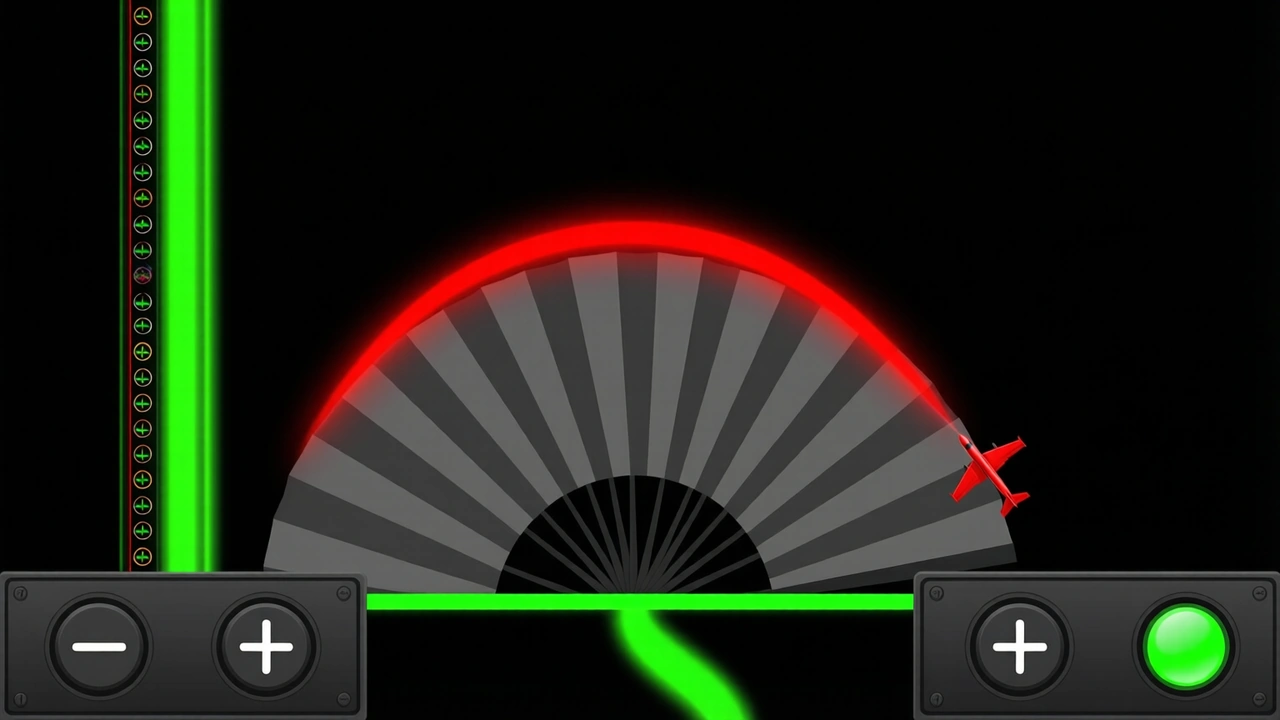
Under the canvas sit two identical control panels. Each has a stake control and a cash-out button of its own, and both are live in the same round. It is a genuine design feature with a genuine use, and it is also the single most common way people spend twice what they meant to.
The account desk
What the second panel is for
The intended use is splitting a decision that would otherwise have to be made once. With one bet you must choose a single moment to leave. With two, you can take one out early and let the other run, which converts a single all-or-nothing choice into two smaller ones.
The two bets are completely independent. Separate stakes, separate cash-outs, separate settlement. Nothing about panel one affects panel two, and a round can end with one bet cashed and the other lost.
That is the whole feature. It does not improve the odds of either bet, and it does not reduce the total at risk — two bets of a given size is exactly the same exposure as one bet of twice the size, spread across two exits.
The account desk
Why it costs people money
Three reasons, all of them interface rather than strategy.
Both panels can be active by default. Depending on lobby and layout, a player who sets a stake in the first panel may find the second already carrying one. On a phone, the second panel is often below the fold.
Nothing on screen adds them up. There is no combined "total staked this round" figure anywhere obvious. The player sees a number in a panel and reads it as the cost of the round. The cost of the round is the sum of the active panels.
Auto-bet compounds it. Auto-bet set on both panels repeats both stakes every round, without a decision in between. A session that felt like small bets can be twice the size and several times the frequency of what was intended.
None of this is a trick. It is a feature that is easy to use and easy to misread, which is a very ordinary combination.
The account desk
A concrete way to keep track
Rather than a rule about stake sizes, which nobody follows, a habit about the interface:
- +Before the first round of a session, look at both panels. Not the one you set — both.
- −Decide deliberately whether you are playing one or two. If one, set the second to nothing and leave it.
- +If two, treat the pair as the unit. The round costs the sum, and that sum is the number you should be comparing against whatever limit you set.
- −Check again after any break. Layouts reflow, and a reload can restore defaults.
The whole thing takes a few seconds and removes the most common source of "I didn't realise I was betting that much".
The account desk
Auto-cash-out is a discipline tool, not an edge
Since it sits in the same panel, it is worth being clear about what it does. Auto-cash-out takes your bet out at a level you set in advance. That is genuinely useful, because hesitating is a real behaviour and a preset removes it.
What it does not do is change the distribution of outcomes. An automatic exit at a given multiplier is the same bet as a manual one at the same multiplier. The tool improves consistency of execution, not the expectation behind it — the earning question covers why nothing in this game improves that.
The account desk
Where the money actually is during all this
Worth restating because the two panels make it easy to lose track. When you confirm a stake it leaves the lobby wallet immediately and sits in the round. When you cash out it returns to the wallet at the figure on screen at that instant. The game holds nothing at any point; the operator's ledger is what settles.
With two panels, that means two separate removals and up to two separate returns per round, all of them to and from the same wallet. Balance, credit and stake has the full sequence, including what changes when part of the balance is bonus money rather than cash.
The account desk
One thing the panels do not tell you
Whether the stake behind them is cash or credit. The panel shows a number; it does not show which kind of money it came from. If a deposit bonus is active and under wagering, both panels are staking balance that cannot leave until the requirement is met. That is a cashier fact, invisible from the game screen, and it is the sort of thing that only becomes apparent at the withdrawal — which is why bonus terms is worth reading before rather than after.